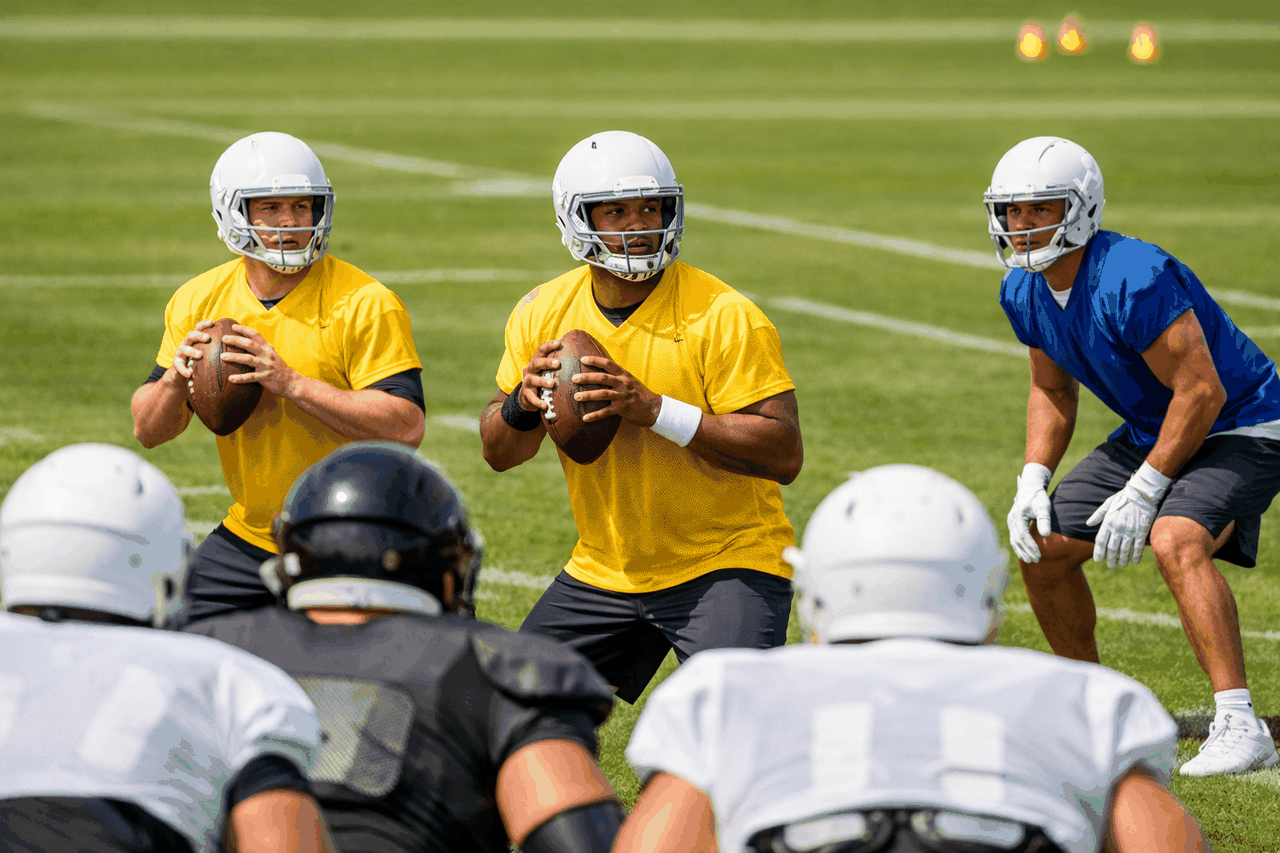
A Superflex league lets you use a quarterback in a flexible starting spot. A two-QB league requires a quarterback in each of two dedicated spots. That difference matters when the last acceptable starter goes two picks before yours. In Superflex you can still fill the flexible spot with an eligible skill-position player. In two-QB you need another qualifying quarterback to field both spots.
Lay out the two starting lineups
In this 12-team half-PPR example, the RB, WR and TE starter requirements are the same across the two profiles. Change only one slot. Sleeper’s Super Flex setting allows QB, RB, WR or TE. The comparison league replaces it with a second dedicated QB spot.
| Available starters for the two comparison spots | Superflex | Dedicated two-QB |
|---|---|---|
| QB A and QB B | QB A and QB B can both start | QB A and QB B can both start |
| QB A and WR C | QB A starts at QB. WR C can fill Superflex. | QB A starts. The second QB spot is vacant. |
| QB B on bye and only QB A active | Use an eligible RB, WR or TE for the flex slot. | Find an eligible QB replacement or leave the second slot vacant. |
Across 12 teams, two dedicated QB spots create 24 required starts every week. Superflex creates 12 required QB starts, with room for 12 more. Managers can still compete aggressively for that optional second starter. Count the backups other teams may want as well as the opening lineup demand.
Decide what to buy with the next pick
Suppose you drafted QB A early. Two acceptable starters remain in your next tier, and three managers who could use a quarterback pick before you return. In the two-QB room you may choose to take one now, particularly if the next tier offers little dependable cover. Taking a WR here can be an expensive delay if it leaves you hunting for a second active QB under a strict position cap.
In Superflex, compare the QB’s potential advantage over your flex fallback with the improvement at the other starter spot. For a simple weekly teaching comparison, a QB penciled in for 15 points adds five over a 10-point WR in the flex. If your alternative pick improves another starter by more than five and a reasonable QB could remain, you have grounds to wait. Change either estimate and see whether the decision flips.
| What is left when you pick? | Superflex | Two-QB |
|---|---|---|
| Two acceptable QBs remain and three QB-needy teams pick before you return | Compare the QB’s gains over your flex fallback with the gains at another starter spot. The example’s QB adds five points. If the other gain is larger and the flex fallback is workable, take the other starter. | If your second QB spot is unfilled and the next tier has no dependable replacement, take a QB now. There are more possible buyers than acceptable starters. |
| Enough acceptable QBs can survive the next turn | Consider the strongest other starter, then re-count the QB tier on your next turn. | Consider waiting if the second QB spot is still realistically fillable. Write down the specific QB tier you will use at the next pick. |
| No acceptable QB remains at this price | Use an eligible flex option. Reassess the next QB tier only if it improves the lineup. | Identify the next eligible QB tier or a supported trade route. A non-QB pick may help another position but leaves the second QB spot open. |
Make the roster work after draft day
Check bye weeks and whether your format limits how many quarterbacks you can hold. For two-QB, write down which weeks your second spot would be empty if you drafted only two starters. In Superflex, identify the player you would actually put in the flexible slot when one QB is out. That gives you an executable alternative rather than a plan to fill the spot late. Use the ordinary round-by-round framework to judge the opportunity cost around those roster requirements.